System Architecture & Integration
Overview
The Gremlin project is built as a hybrid microservices platform. It leverages a centralized identity management system with distributed business logic across discrete runtimes.1. Core Runtimes
2. Shared Source of Truth (Identity)
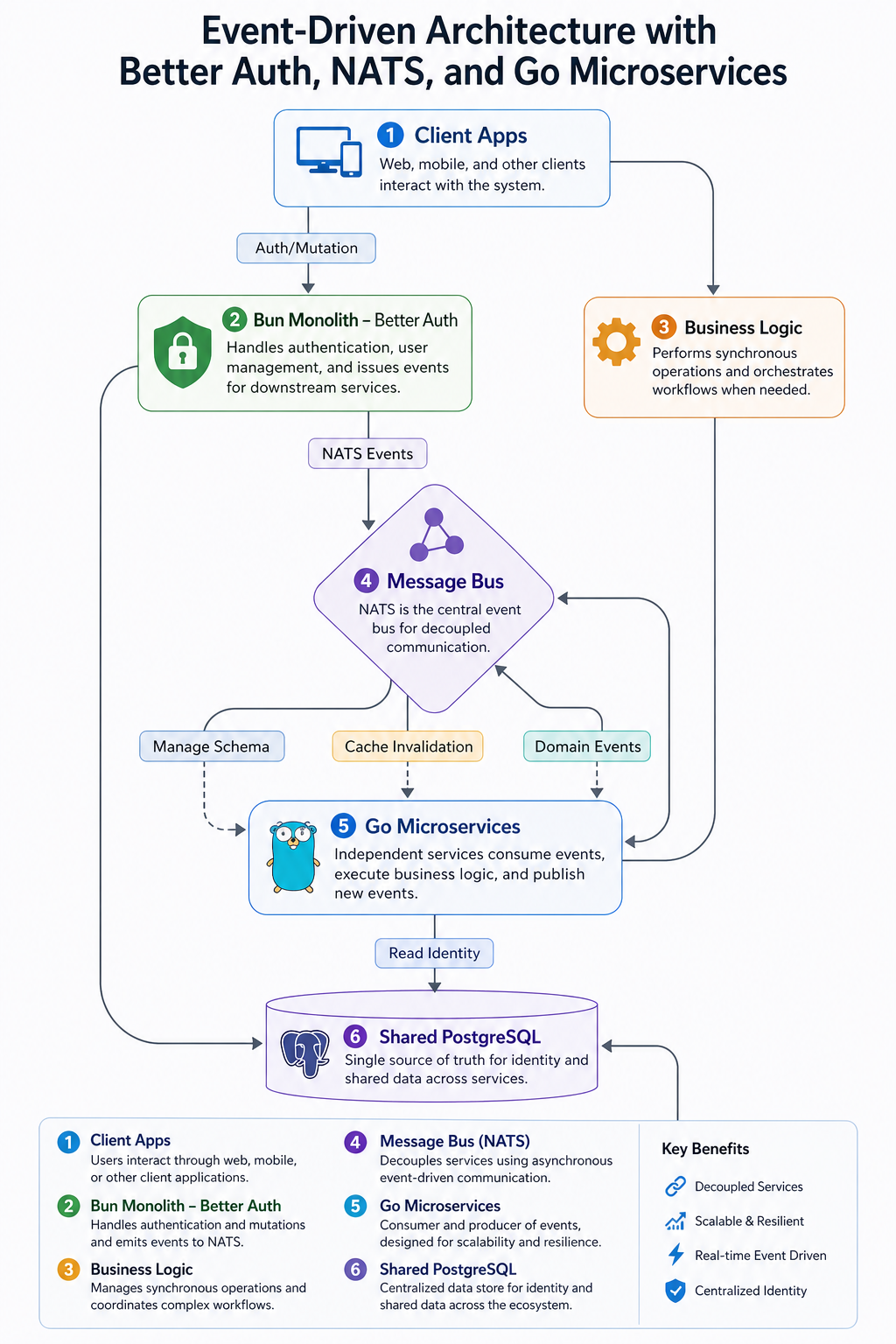
The platform adopts a Shared Database Pattern for identity. Better Auth, running on the Bun monolith, is the exclusive authority for managing users, organizations, and sessions.Key Integration Rules
- Mutations via Bun: All user registrations, role assignments, and organization changes MUST go through the Bun backend’s Better Auth APIs.
- Queries via Direct DB: Go services query the shared PostgreSQL tables (
users,members,organizations) directly for read-only lookups. - Stateless Security: Authentication is managed via stateless JWTs signed with a shared
BETTER_AUTH_SECRET.
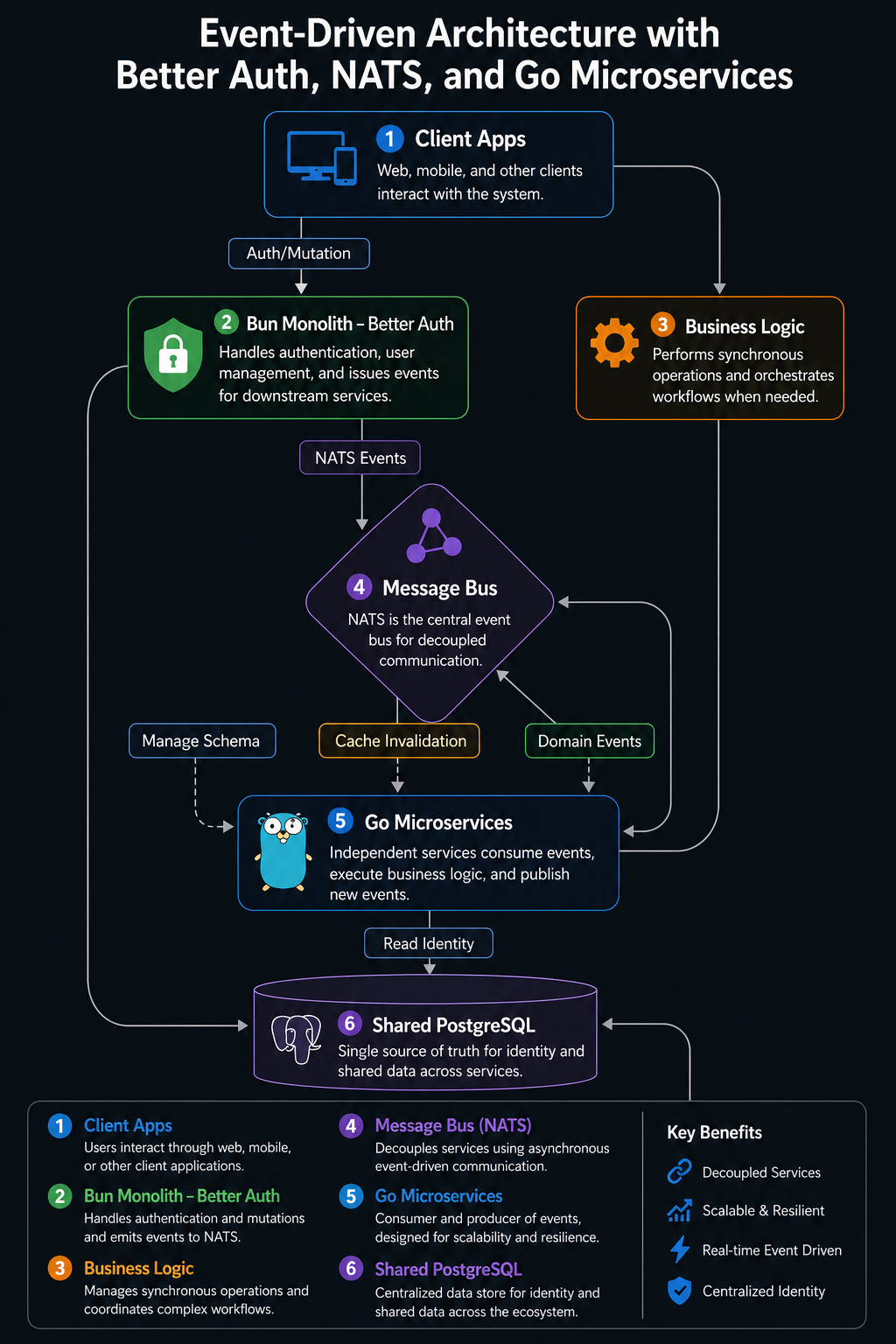
3. High-Level Communication Flow
4. Database Strategy
The platform uses a “Fit-for-Purpose” database strategy:- PostgreSQL: Used for Identity (Better Auth) and all Relational Go modules (Leave, CRM, etc.).
- MongoDB: Used by the Bun monolith for configuration and high-availability session logs.
- Redis: Shared distributed cache for rate-limiting, idempotency, and permission caching.
5. Microservice Decoupling
Services are decoupled through:- Shared Identity Tables: Direct access avoids expensive and fragile synchronization logic.
- NATS Message Bus: Domain-specific events (e.g.,
order.created) allow services to react without direct Coupling. - Hexagonal Architecture: Both Bun and Go services strictly separate core domain logic from infrastructure details.
6. Security Model
- Authentication: JWT-based (HS256). Token signature verified at the boundary of every service.
- Authorization: Role-Based Access Control (RBAC). Roles are resolved from Better Auth tables and mapped to service-specific permissions.
- Data Isolation: Multi-tenancy is enforced at the query level using
organization_idfilters.